

MOTORSPORT NEWS - Women and men race head-to-head on both the karting and Formula grids, but a separation is often drawn afterwards on results sheets, classifications, driver profiles, and awards.
Pascoal: Racers should be judged by performance, not gender
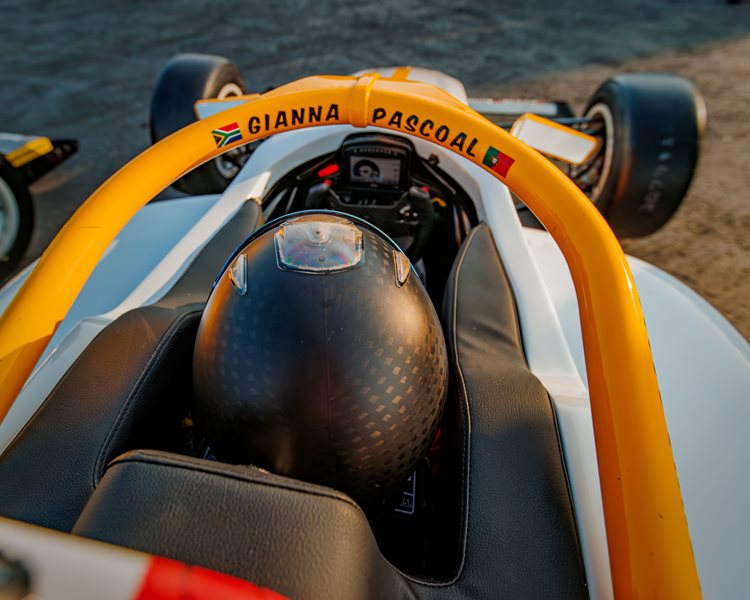
Gianna Pascoal, a 16-year-old South African driver argues this doesn’t make sense in what is one of the most gender-neutral sports in the world.
She notes that a woman who places second or lower on the main standings could still list first in the female rankings. The same goes for a man who finishes after a woman. Depending on which list you look at, this can create a false perception that’s unfair to the person who won the whole race.
Pascoal currently competes in the Investchem MSA Formula 4 series. She has raced against male and female drivers throughout her career and has beaten and been bested by both a number of times. For her, it’s always been a test of skill and grit, and nothing else.
“When I’m on the track, I’m competing against other drivers, and I win or lose whatever their gender. When the helmet goes on, we’re all the same. It doesn’t make sense to then split us up once we step off the track. It can make people see male and female racers differently, even when that’s not the intention, and that affects how we’re treated.”
Taking the equality message to Angola
Pascoal is preparing to compete in a continental karting event in Angola in early October, shortly after National Women’s Month in South Africa, making it the ideal time for her to address the challenges women face in racing.
Principal among these is the fight to be treated and spoken about on equal terms with their male peers.
Female development programmes should lead to the main grid
The gathering will also bring together motorsport federation leaders from across the continent to discuss plans for a possible six-race championship staged in six African countries. For Pascoal, that timing matters a great deal. “Leaders are making decisions that could change karting and racing in general in Africa. My appeal to them is to consider what female drivers’ place in all of this will be.
“I don’t want women to be added as an afterthought once everything has been put in place. If Africa is building a stronger racing pathway, female drivers must be part of the main competition from the start. That means introducing more programmes that support new racing talent among young girls. And once they’re on the grid, they should be treated exactly the same way as the boys. That’s what real equality is.”
Pascoal acknowledges that while she wants all drivers to be measured equally, it’s undeniable that far more men occupy grid spots than woman, and some level of female-empowerment will be needed to open the door to more female drivers.
As such, she does not reject female-focused development, and she herself was selected for the globally recognised More Than Equal Driver Development Programme, which provides promising female racers with structured technical, physical, and performance support.
Building a stronger racing pathway for African women
She believes programmes of this nature are necessary because girls often enter motorsport later, receive less track time and struggle to attract the sustained financial backing required to progress. But their purpose must be clear. “
Female development programmes have to prepare women for the strongest competition available. They should be a bridge to the main grid, not a permanent place where female drivers are expected to remain.”
That distinction, she says, is especially important as Africa looks to create a championship capable of developing drivers on the continent, reducing the need for young racers to travel abroad simply to access competitive opportunities.
The proposed series is intended to give drivers from different African countries meaningful competition closer to home, while helping national federations identify and develop talent within their own markets. Pascoal believes these efforts and intentions should be directed at young female drivers as much as men.
“Africa has an opportunity to build something new without repeating the same exclusions that have held women back elsewhere. We shouldn’t measure progress by how many separate spaces are created for female drivers. We should measure it by how many women are competing successfully in the main championships.”
‘We bring you the latest Garden Route, Hessequa, Karoo news’