

BUSINESS NEWS - When people think about careers in ocean conservation, they often picture marine biologists, scuba divers or scientists working at sea.
However, protecting South Africa's oceans requires far more than scientific expertise.
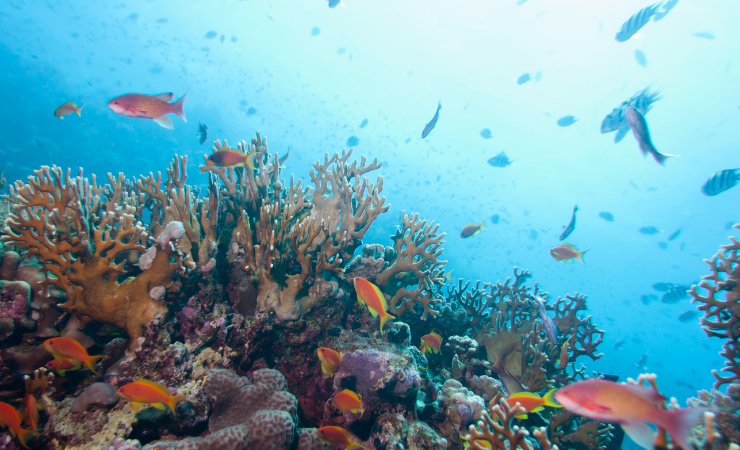
From teachers and journalists to tourism operators and photographers, people from a wide range of professions are playing an important role in safeguarding the country's Marine Protected Areas (MPAs).
Ahead of MPA Day on 1 August, five South Africans from very different career paths are sharing how their work contributes to ocean conservation, proving that anyone can make a meaningful difference.
Tourism helps people connect with the ocean
Wilfred Chivell, CEO of Marine Dynamics Shark and Whale Tours, Marine Dynamics Academy and founder of the Dyer Island Conservation Trust and African Penguin and Seabird Sanctuary, believes conservation starts with creating meaningful experiences.
"I have always believed that people protect what they understand and value," he says.
Over the past 25 years, Marine Dynamics has introduced hundreds of thousands of visitors to South Africa's marine wildlife, including whales, sharks, dolphins, seals and African penguins.
Chivell says his career was shaped more by practical experience than formal qualifications, having spent thousands of hours at sea alongside scientists, researchers and conservationists.
Among his proudest achievements are establishing the Dyer Island Conservation Trust, opening the African Penguin and Seabird Sanctuary, contributing to more than 40 scientific publications and mentoring young conservationists.
His advice to anyone considering a career in conservation is simple: be passionate, work hard and never stop learning.
For MPA Day, Marine Dynamics and the Dyer Island Conservation Trust will join CapeNature and CFAO Mobility Toyota for a community coastal clean-up in Gansbaai.
Teachers inspire the next generation of conservationists
Gladness Sikhosana, retired manager of the Mimosadale District Teacher Development Centre, says education is one of the most powerful conservation tools available.
"As educators, we protect the next generation, which in turn will protect the ocean," she says.
Sikhosana believes teachers help bridge the gap between scientific research and everyday understanding by showing learners how their actions affect rivers, coastlines and the ocean.
Her teaching career began in Sunday school before she completed a Master's degree in Education, an Adult Basic Education programme through UNISA and additional environmental courses at uShaka Marine World.
She says seeing former learners pursue careers in environmental conservation remains one of her greatest achievements.
For MPA Day, she plans to adopt a rural school and lead a schoolyard clean-up.
Environmental journalism raises public awareness
Award-winning environmental journalist Tony Carnie says journalism plays a vital role in protecting the ocean by informing the public about environmental threats.
"Journalism provides a public forum to raise people's awareness about the threats to ocean health," he says.
After studying journalism in Zimbabwe, Carnie gradually shifted his focus towards environmental reporting as global awareness of conservation issues increased.
He encourages aspiring journalists to challenge authority, remain open-minded and help readers understand why environmental issues matter.
His MPA Day contribution will be to continue researching and publishing stories that encourage people to value Marine Protected Areas.
Marine tourism supports conservation
Pamela Le Noury, Head of Expedition Operations and Sustainability at Noble Caledonia, has spent more than 26 years working in marine tourism.
She says expedition guides contribute to conservation by observing marine wildlife, supporting citizen science and working closely with researchers.
Her career has included roles as a dive instructor, powerboat skipper, whale-watching operator and expedition guide, taking her to some of the world's most remote marine environments.
Le Noury encourages young people to follow their passion while maintaining a healthy work-life balance.
She plans to celebrate MPA Day exploring rock pools with her family.
Citizen scientists also make a difference
Dennis King, an underwater photographer, recreational diver, author and creator of the Coastal Fishes apps, believes anyone with a passion for the ocean can contribute to conservation.
Despite having no formal scientific qualifications, King has spent more than seven decades documenting South Africa's marine life through photography, books and mobile apps.
Among his career highlights are having the Tiger Angelfish (Apolemichthys kingi) named in his honour, leading citizen science projects and co-authoring The Reef Guide.
"You don't have to be an academic to make a difference," he says.
King encourages divers, snorkellers and ocean enthusiasts to spend time observing marine life and sharing their knowledge with others.
Every career can help protect the ocean
As MPA Day approaches, organisers are encouraging South Africans to consider how their own skills and professions can contribute to protecting the country's Marine Protected Areas.
Whether through education, business, tourism, storytelling, scientific research or community involvement, every contribution helps build a more sustainable future for South Africa's oceans.
People interested in learning more can participate in MPA Day activities, volunteer with conservation organisations, explore citizen science initiatives and discover the many career opportunities that support marine conservation.
The organisers say protecting the ocean is not only the responsibility of marine scientists – it is something everyone can contribute to.
‘We bring you the latest Garden Route, Hessequa, Karoo news’