

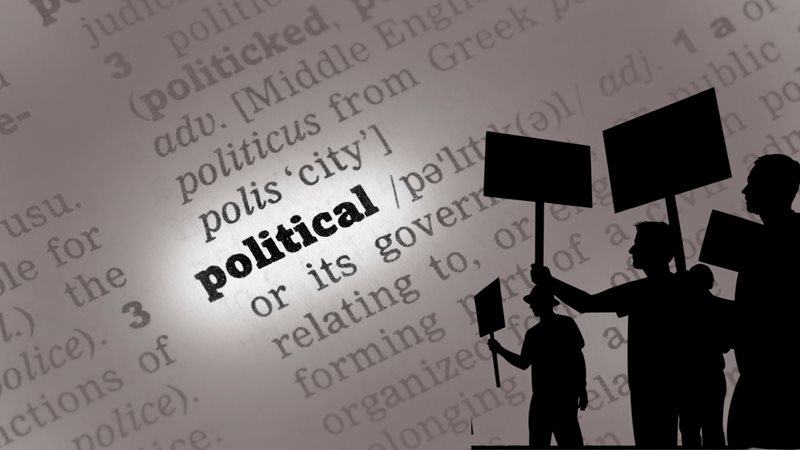
South Africa’s socio-political environment continues to present significant challenges for businesses, especially since political violence and terrorism (PVT) risks are no longer abstract concerns but tangible threats that have already inflicted billions of rand in losses. As unrest becomes more frequent and more complex, the insurance industry is adapting to ensure businesses remain resilient in the face of uncertainty.
Political violence in South Africa has historically been linked to socio-economic pressures such as unemployment, inequality and poor service delivery. These issues remain unresolved, and their impact is increasingly visible in the form of strikes, riots and civil commotion.
The July 2021 riots remain the most striking example of how quickly unrest can spiral out of control. Sparked initially by political grievances, the unrest escalated into widespread looting and destruction across KwaZulu-Natal and Gauteng. The economic cost was staggering, with over R50 billion in damages, thousands of businesses destroyed, and more than 300 lives lost. For many companies, recovery was slow and incomplete, with some never reopening their doors.
Recent surveys indicate that 79% of South African businesses fear a repeat of such unrest, citing unemployment, inequality and failing infrastructure as major triggers. This sentiment underscores the fragility of the business environment and the urgent need for risk mitigation strategies.
One of the most significant shifts in recent years has been the role of social media in amplifying grievances and mobilising communities. Movements gain traction almost instantly, and when ignored, frustration often escalates into violence.
“Social media has created what I call the ‘woke economy’. Movements gain traction instantly, and when ignored, violence becomes the perceived route to visibility,” explains Ferguson Langenhoven, Political Violence & Terrorism Underwriter at iTOO Special Risks.
“Unfortunately, businesses often suffer collateral damage simply because they are in the wrong place at the wrong time.”
This dynamic means that even companies not directly involved in political disputes can become victims of unrest. Proximity alone can lead to vandalism, looting, or reputational harm.
Political violence and terrorism coverage is designed to protect businesses against specific triggers. These include:
Strikes – defined as a work stoppage by three or more workers to enforce demands on an employer.
Riots – violent disturbances by three or more individuals threatening public peace.
Civil commotion – broader unrest that disrupts communities and businesses.
Rebellion, insurrection, and mutiny – more extreme forms of political violence that, while less frequent, carry severe consequences.
These definitions matter because they determine when policies are triggered. For businesses, clarity ensures that they understand the scope of their protection and the limits of their exposure.
The severity of political violence incidents can be catastrophic, even if their frequency remains relatively low. For businesses, the financial impact of a single event can cripple operations, disrupt supply chains, and erode customer trust.
South Africa’s state-backed insurer, SASRIA, currently provides ground-up cover for strikes, riots and civil commotion, with limits of up to R500 million. This protection is vital, but as the 2021 riots demonstrated, losses can easily exceed these thresholds. Once SASRIA’s limits are exhausted, businesses are left exposed, forced to absorb the remaining costs themselves.
This is where iTOO Special Risks steps in. Its Political Violence and Terrorism (PVT) product acts as a top-up, extending protection to exposures SASRIA does not cover. Importantly, iTOO’s PVT product also includes additional triggers such as rebellion and insurrection, offering broader protection than SASRIA alone.
“Every business, regardless of size or sector, should consider contingency cover. You don’t know your exposure until something happens. The severity of these events can cripple operations, and recovery without adequate cover is often impossible. Our role at iTOO is to provide not just financial protection, but access to crisis responders who guide clients through the most difficult moments,” says Langenhoven.
Political violence and terrorism risks in South Africa are evolving rapidly. Economic pressures, social media amplification, and unresolved grievances create a volatile environment where businesses remain vulnerable to sudden and severe disruption.
While SASRIA provides essential ground-up cover, its limits are finite. iTOO’s PVT product ensures that businesses are not left exposed once those limits are exhausted, offering broader protection and access to crisis responders.
In a landscape where resilience depends on foresight and preparation, comprehensive PVT cover is no longer optional, it is essential. For South African businesses, the choice is clear: invest in protection today to safeguard operations against the uncertainties of tomorrow.